Wednesday, November 17, 2010

Mountains and Seashores in Slovenia


Slovenia, October 5 - 8:

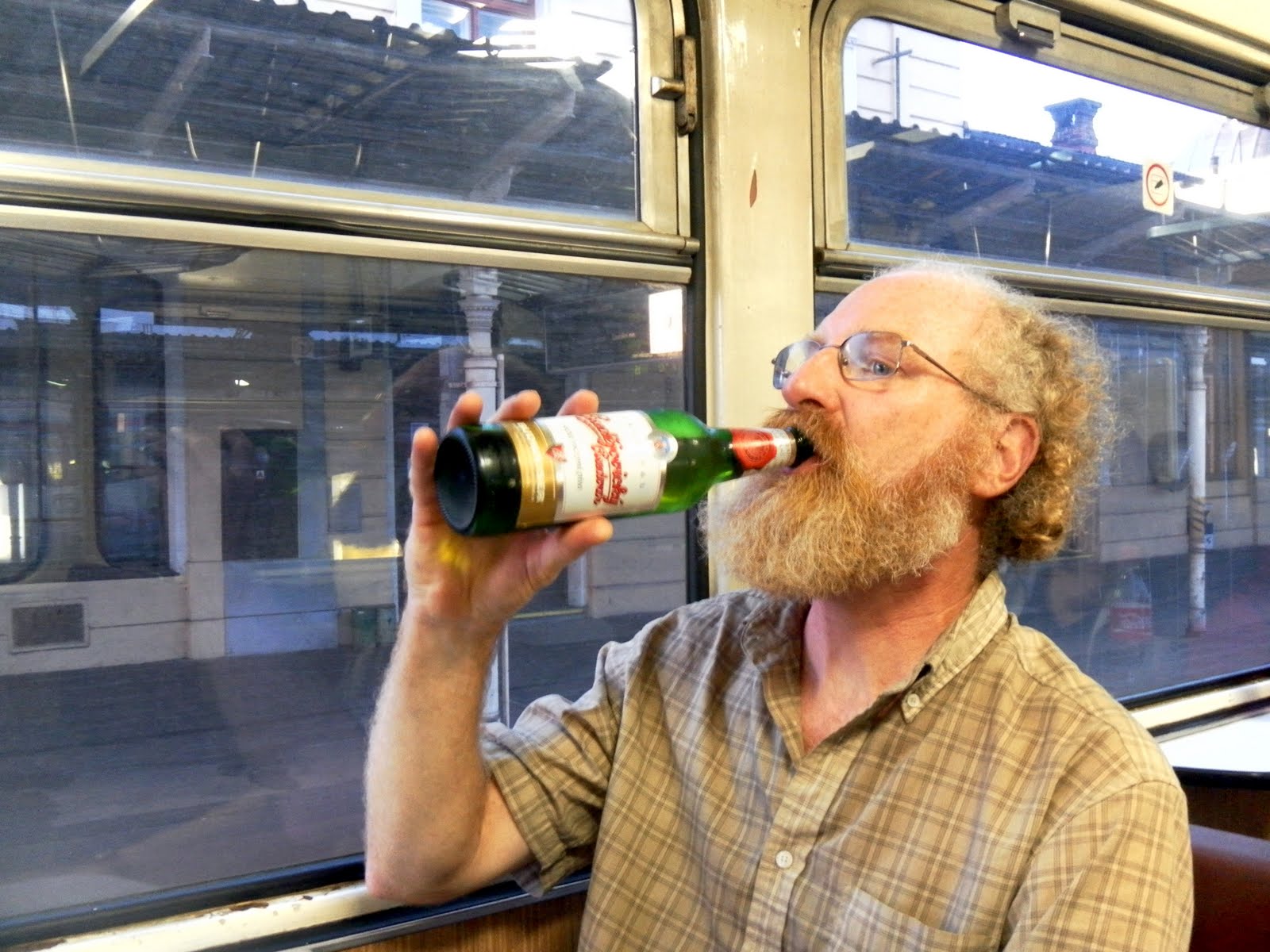
Train from Hungary - just after the bus part of the train journey. A little tricky with bikes!
Our hostel in Ljubljana - believe it or not, a jail developed by artists!

Farm in foothills of the Alps.
Bled, a popular tourist spot -- see why?

Rail trail along the coast heading to Croatia.
The warm Mediterranean! Great trail too!
Enchanting medieval town of Piran, close to Croatia.
View over Izola, with Italy in the background.


We had a warm reception at the Celica Hostel in Ljubljana at 2 in the morning, with their all- night staff ready to show us to our prison cell. Really! The hostel is a former prison and an artist's co-operative gave the about-to-be-demolished prison building new life by turning it into a great hostel with helpful staff. It had a sun room for breakfast, an area for gatherings and jam sessions (including an intriguing concert one evening), plus a small art gallery used as a vocal harmony practice venue! Each bedroom is different, with even the furniture arranged by different artists in each room. Unforturnately, our artist liked the idea of sleeping closer to the sky, so our individual beds were almost 2 metres up in the air. It was a bit of work to get up there at 2 in the morning. Luckily the wine from the train ride had long worn off!

We toured modest-sized Ljubjana, capital of small Slovenia, enjoying their market and artisan food shops, and their historic and reinvigorated castle overlooking the city, all the while dodging rain drops. Tempted by the photos of the mountains and trails in the Bled area to the north, we took a bus to Bled and Bosinj the following day and hiked from a mountain lake up to some waterfalls. The mountain river roared down a cleft in the cliff, then tumbled down a picturesque gorge over boulders and through just-turned gold and russet deciduous woods. Late in the day, we saw a bit of the town of Bled as well, from a scenic path around its mountain lake, although the vistas were largely hidden in the clouds and 'mist'. Our final leg in this former part of Yugolavia took us by train to the Adriatic Sea coast at the ancient seaport of Koper. Here, we encountered summer again. It felt so good to strip off some layers and feel the warmth of the sun. We biked along the coast, within sight of the Croatian border where the terrain was rolling and beautiful! In the evening, we visited a popular medieval town, enjoyed the seaside atmosphere (and seafood, of course!) and spotted the lights of Italy's Trieste and Venice in the distance. We felt that we had barely scratched the surface of the scenic splendours and the warm, creative people of Slovenia, but were glad that we had lingered longer to at least sample a bit!

There is a distinct pattern to our camping now. We are the only ones tenting and there are not a lot of other campers around at all, mostly empty trailers. It seems as though we may be pushing the season a wee bit! Even here, on the Mediterranean, the nights have become quite cold at times. Accordingly, we decided to push on to Italy and further south into Tuscany.

Sunday, October 10, 2010

Hungry for Pavement in Hungary

Hungary, September 24 - October 4:

"Chalk Man" (whom we never met) was a big help, with helpful arrows along the way! Notice the arrow and the letters ATM on the pavement. Apparently, we are not the only disoriented cyclists in these parts! Too bad Chalk Man didn't leave a currency converter at the ATM. We accidentally took out $1000 instead of $100. Then again, we didn't need another ATM in Hungary!
EuroVelo Route 6? Yup, right, ug, here, after two hours of cycling in circles through automotive industrial parks and flea markets. Funny the signage isn't quite up to snuff! It's quiet though!
View from Esztergom Basilica along the Danube River. Campsites are sure getting quiet - perhaps fall is catching up to us ...!!
Now the trail is better and the locals are out on errands. Notice the flowers.
Budapest beckons.
Hot springs spa in Budapest
Tile work in plaza, St. Stephen Basilica in downtown Budapest


We pressed on into Hungary with fall weather chasing us. The nights are noticeably cooler and longer now, and our first night found the campsite closed for the season. Instead, we followed the light to a lovely horse farm with rooms. Our first taste of Hungarian hospitality was delicious, two large pieces of lovely birthday cake from a family celebration of our hosts! We carried on through many small towns and countryside to reach the city of Gyor. We loved Gyor - they have restored all their gorgeous buildings downtown, with lovely squares and pedestrian walkways. They held off the rain until we were settled into a sweet hotel for the night, and we lucked out and were there for a Roma festival of dance and music that was top notch. It was an outdoor festival that held the crowd captivated, even through bouts of heavy rain.

We loved Gyor, but we didn't have fun leaving. It took us 2 hours to wind our way, lost, through the suburbs and auto plants, only to find our signed trail turn to a muddy road after a few kilometres. After faking our mountain biking prowess, the surface improved and we sailed into Tata, once again just in time to escape a deluge of rain and dropping temperatures. We arrived in town at the same time as did Sarah and Mike, British cyclists heading our way - we ducked into a pensione together and then enjoyed a nice dinner sharing cycling stories. We also cycled on to Esztergom the next day together. It was a mixed day of busy roads, one stretch of lovely countryside and then a bit more... well, mud puddles!

We camped in Esztergom, getting in early enough to visit their famous basilica and enjoyed a great dinner out. We have been eating in restaurants many nights because the camping is mostly closed and the weather a bit cool. The ride from Esztergom to Sentendre was our best in Hungary - and lo and behold, we again met Mike and Sarah at the ferry, joined by another cycling couple from Madrid. This part of the route includes the scenic Danube Bend where the river turns south and heads into Budapest. Large hills line the river here, with vineyards and ancient castles, and the trail is well signed and in reasonable condition. From Esztergom to Budapest, the ride was unexciting, traversing kilometres of city, and the trail was difficult to find in places. We were impressed with the riding in Budapest, though. We had heard that it was horrendous in the past, but now they have lots of trails, cycle tracks and bike lanes. Way to go, Hungary! In fact, most of the urban areas that we encountered in Hungary had extensive cycling infrastructure. Although not perfectly engineered, it was humbling as Canadians to see what a great job of providing for cyclists a relatively poor country like Hungary does. Hungary more than any place we have visited so far inspires us to do better for cyclists in Canada.

We had a restful time in Budapest, enjoyed the great location, kitchen, visitors and staff at the Red Bus Hostel. Our bikes liked it, too! They got parked inside for a change and got to thoroughly dry out. Luckily, Sue had cleaned most of the mud off the bikes before entering Budapest! We also got a chance to give ourselves a good cleansing too, as we enjoyed the Turkish-influenced bath culture at one of the four major hot spring spas in town: saunas, steam baths, some 15 or so pools of different temperatures, plus one with circular waves and bubbling jets that kept the fun quotient high for all the bathers of many ages. Ian enjoyed the agricultural museum (forestry, farming, gathering, fishing, hunting, conservation, plus traditional breeds of livestock), while we both marvelled at the city bike show's penny farthings, cycle taxis, scavenger hunt around town, plus kids doing bike tricks.

We found the free (except tips) walking tours were informative, giving us a tour of the core of downtown and up to the heights of old Buda, plus a window into the changes from early tough communism to a later, lighter version. The magnificent parliament caught the afternoon light along the riverbank, but the nearby shoes as memorials brought up past Nazi horrors. Hungary has had to endure so many foreign powers coming through over the centuries and continues to struggle as it emerges into self-determination - the local elections took place while we were there, with conservative councillors being the most successful.

On the Sunday we visited a Unitarian church service downtown (in Hungarian, of course), and chatted with a few congregation members and the minister afterwards. The latter had visited the First Unitarian church in Toronto, and was very knowledgeable about connections between Unitarians in North America and in eastern Europe. We also connected in the city with Ian's Uncle Jack and Aunt Gail, who had just finished up a Danube River cruise that had started in Amsterdam. Over a fancy breakfast at their hotel next to the Opera, we shared news, stories and reflections and were glad to meet up with family from home!

After our rendezvous, we packed up our gear and boarded the supposedly direct train for Llubljana, Slovenia for a fateful "three hour cruise" of nearly Gilligan's Island proportions. We had chosen this train since we could not make the logistics work to spend an extra day around central Europe's largest Lake Belaton. However, around 5 pm, we were informed by the conductor via another passenger that we would have to change trains, with a half hour bus connection in between! Well, they said they didn't have room for the bikes on the bus, but we eventually got them to fit, then had a half hour wait at a countryside station as it started getting dark, and then joined a young professional Latin dance couple in the next train's compartment. Three stops later, we had to move all of our gear and bikes back three cars, and then do it again at the border with Slovenia. We now think that the train systems (and the ticket agents back in Budpapest) still leave alot to be desired! Still, we admire the Hungarian people, their courage and persistence, and the fact that much is starting to change for the better.

Monday, September 27, 2010

Czeching out Austria

Austria and Czech Republic, September 8-23:


The Real Bud in Ceske Budjevice - on train to Ceske Krumlov
Ceske Krumlov, The Czech Republic
Viennese Host Heinz and his partner with Ian
Coming in to Passau, Germany on the Bike Trail along the Inn River (from Salzburg)

Further down the Danube just past Grein, Austria


Austria's mountains and the Danube River called to us, so we caught an early train from Lucerne to Zurich and onwards to Salzburg in Austria. Along the way, we passed through lush Liechtenstein, along steep river banks, and spied the Tyrolian alps shrouded in wisps of mist for most of the day. In Salzburg, we camped on the outskirts of town with a view off to the castle and a good, warm restaurant on site when the weather turned wet. We explored the ancient castle with its grand views over the old town, the latter filled with historic churches, squares and quaint store signs hanging over the street.

It was then time for us to saddle up and sidle down the Salzach River. We enjoyed pleasant shoreline riding, with a few strenuous climbs up to a plateau above the floodplain. We arrived late afternoon in one of our favourite towns across the river in Germany, Burghausen, and checked into a youth hostel attached to a music school focussed on jazz! We enjoyed a sunset stroll and then, as we were returning to our lodgings, followed the sounds of a jazz standards concert by a young trio in the medeival heart of the old town. Next morning we hiked up to Burghausen's castle, the world's longest (1.3 km or so), stretched in dramatic fashion along the top of a ridge and entirely surrounded by the winding river below and its natural oxbow lake. Quite a delight to discover this town with a flare, both old and new, cultural and natural!

Our journey downstream led us to the confluence of the Salzach with the Inn River, bordered by an international nature reserve of lowland forest and floodplain. We encountered a succession of old towns with colourfully-painted buildings, ancient fortifications and "cyclists welcome" signs on guesthouses and streetside pubs - at one, a fellow cyclist approached us and invited us to stay with him outside of Austria! The Inn led us down to Passau, at the dramatic junction with the renowned Danube River. A few hours exploring the pedestrian-only core and we then set out along the well-marked cycle trails beside the Danube. What amazing views of treed shorelines, steep hills, peaceful trails, and passenger and freight ships, shared with a fair number of fellow cyclists on day- or multi-week trips. At Schlogen, we arrived at a splendid bend in the river with a small farm/restaurant/ferry service/campsite, and settled under the apple trees for the night. Our only neighbour was a French cyclist from Lyon. After a cold night with lots of dew, we had a chance to dry everything out and add to our breakfast fresh cow's milk - about half an hour out of the cow!

At Linz, we stayed at a suburban hostel, got cleaned up and indulged in a typical buffet breakfast of buns, cheese, cold cuts, cereal, coffee, tea, juice - and cake! Linz was Europe's cultural capital in 2009 and has a suite of dramatic architecture along its main square and roads, plus a new modern art gallery lit up at night along the Danube. We enjoyed the historical treatment of Austrian works, particularly learning of the mayor's social actions in the 1940s and artists' resistance to Nazism (this, after all, was where Hitler went to school and first declared the anschluss of Austria). We also were amazed by the light waves show across the river at the Ars Electronica Centre.

We wanted to see a sampling of the Czech Republic and took a train from Linz to Prague, crossing the former Iron Curtain along the way. How things are so different now - no border controls throughout most of Europe, use of the Euro pretty much everywhere (but not in Czech or Hungary), and an international exchange of people, ideas and culture that was smothered for 50 years until the dramatic peoples' (largely) peaceful revolutions in eastern Europe. Prague, as we had heard, was magnificent architecturally - the old clock tower, Charles Bridge, churches, synagogues, central squares, public edifices and buildings along every downtown street. The castle was extensive (the world's largest), with King Wenceslas' tomb in the cathedral, but we actually enjoyed some of the other smaller castles more, such as the one at Burghausen. Despite some rain, we appreciated this centre of culture, including a classical symphony concert at the Municipal Hall. A brief visit to the Unitarian church near the Charles Bridge helped us connect to our wider Unitarian community beyond our own Peterborough Fellowship.

After a tip from some Italian women cyclists we encounted twice along the Danube, we extended our Czech leg to the world heritage site of Cesky Krumlov, between Prague and the Austrian border. This is an intact medeival town along a curling stream, overlooked by another ridgetop castle and gardens. The buildings were in good shape, full of shops, accommodations and restaurants, along active streets - with loads of tubers and kayakers running the rapids before retiring to the pubs! The surrounding hills, forests, brooks, ponds and villages were also a treat, as were the old centre and beer of the original source of Budweiser Beer - Ceske Budejovice!

Upon returning to Linz in Austria, we moved on to Mauthausen, the site of a Nazi concentration camp and centre of a network of some 80 work and transportation camps across Austria. Over the course of 7 years, some 200 thousand people passed through these camps, of which about half died from deliberate execution or deplorable conditions. You could feel the weight of such horrors there. We spent most of our time absorbing the impact of this era through the numerous dramatic memorials just outside the camp's walls - to the children, Jews, homosexuals, Roma/gypsies, Russian prisoners of war, and people of many nationalities, especially from eastern Europe. One of the more moving monuments was to the American soldiers who died in the fighting as they moved forward to liberate this camp, with others helping its survivors to recover. Exploring the Old Jewish Quarter in Prague impressed upon us again the magnitude of the losses to the Jewish, Czech, European and world communities of so many Jews during the Nazi regime. Few synagogues now operate and the Jewish population has contracted so much, both here and across Europe.

We spent three nights in Vienna, graciously hosted by Heinz, a fellow cyclist we had met further up the Danube. We had a whole basement suite and went out two nights to different wine taverns in the Klosterneuburg area where Heinz lives. One must do in Vienna as the Vienese do! A wine tavern is run by the family of a local vintner and they serve they own wines and terrific traditional foods. We think the tradition could be worth replicating! During the day, we visited St. Stephen's cathedral, gawked at the architecture along the ring road (built on the former land of the medieval wall), visited the Hofburg Palace and the Albertina on opening day of a fantasic Picasso exhibit. The exhibit was called Peace and Politics and delves into these aspects of the artist's work and life.

The ride out of Vienna was less than stellar with the classic lack of signage which characterizes so many long distance bike routes in and near larger centres. We eventually reached Bratislava, Slovakia. We had a quick, but thoroughly rich experience in Bratislava before heading off to Hungary along the well paved Danube River trail, which is part of the long distance EuroVelo Route 6.

Monday, August 30, 2010

Switzerland

Switzerland, August 28 - September 6:

The view over Lake Neuchatel and Switzerland's largest vegetable growing region
Enjoying a fine meal with the Bublozs in Neuchatel
Switzerland's veggie belt


Near Interlaken


Interlaken


Up the Brunig Pass
Lucerne


We hopped the train in Freiburg and made our way to Biel/Bienne in Switzerland. We had barely stopped to check out the local sign maps when a cyclist approached to help us out. He set us off in the right direction, and our route was then easy to follow via the excellent maps and signs along the way.

Our destination was our good family friends in Neuchatel, Eric and Madeleine Bubloz, and their visitors Sevgi and Laura. They welcomed us with open arms, refrigerators, and washing machines! Eric took us on a quick tour of the ancient chateau in Neuchatel, and we visited the local history museum on the waterfront to learn about the Celtic, Roman and later roots of the region. Our hosts took us to the new Celtic festival at the head of the lake, with music, reenactments, crafts, foods and fun for all - good thing we asked a fellow cyclist about all that activity on our way into town! The Bublozs treated us to traditional local fare, including a heated cheese and bread dish called 'raclette', which of course must be eaten accompanied by local wines. We enjoyed speaking French with them, since it is our best second language (and much better than our German). A hike down from the nearby Chaumont hill and viewpoint was a challenge, but we arrived at the restaurant back in town just before the rain.What a treat to have such great hosts, wonderful Swiss hospitality, and to feel "at home" for a few days!

The Bublozs were then off to France, and we set off to the Swiss capital Berne. Along the way, we passed through the large drained marshlands that are now Switzerland's largest region for growing some 40 types of vegetables (something like Holland Marsh in Ontario). Further on, Berne is nestled in a large bend in the Aare river, with its old downtown another World Heritage Site. We enjoyed an evening exploring the old town and the panoramic promenade with fantastic views off to the high alps. Our next day took us and our bikes through the downtown and then descended to river level, with the turquoise Aare swirling by at good speed. Unfortunately, we did not have time to stop and try out the local sport of walking upstream, jumping in, floating merrily downriver, and then grabbing a bar or rope for this purpose anchored in the bank and hauling oneself out (often to walk upstream to do it again)!

Our ride towards the prealps and mountains was lovely, through streamside fields with views of treed slopes and hilly terrain. All the while, we could see the high alps clear ahead of us, gradually getting closer. We followed the Aare upstream to Interlaken, lying between two scenic lakes backed by looming mountains and ringed by parks, restaurants and marinas for the tour and sail boats drifting about. A couple of stretches led us through quiet paths in evergreen forests, over a deep gorge (with see-through metal decking!), up a few steep stretches as the mountains squeezed up to the lake, and then into town. We stayed at a good sized campground with a prime view of the Eiger, Monch and Jungfrau mountains, lit up from morning light into evening moonlight. A quick bus and train ride up into the mountain valley led us into the mountain village of Grindelwald and we had a tremendous day of hiking with a perfectly clear day with which to soak up the views. The next day we ventured one valley over to Lauterbrunen, with spectacular rock walls on both sides of the valley, and then took the fenicular up to Wengen. The hike to Kleine Scheidig was fantastic with Jungfrau mountain, glaciers and waterfalls rising up ahead of us, and parasailers gliding over the peaks above to then circle gracefully down to the valley below. Unfortunately, we dropped our camera trying to take a picture of ourselves, so our trusty Casio was traded in for a waterproof version with a whopping 12 megapixels!

From Interlaken, we cycled along the lake, with the trail being increasingly hilly and steep along the shore, including spectacular waterfalls tumbling into the valley from cliffs above. This was our day to do the Brunig pass, a steep, winding climb of 500 metres on a quiet gravel road. The pass was tough, but Ian hung in there and pedalled the whole way up. Sue went a little slower to... take in the view... really... (and fix a flat)! The big frustration of the day was climbing an extra 200 metres or so to get to our campsite, which was then another 100 metres down. We knew that we would be starting the next day with a long climb. However, we didn't find much sympathy at the campsite. The other cyclists there (from Australia) were towing a 60 kg trailer with their 2 year old in it, mounds of groceries, and who knows what all. Being mountain bike racers, they didn't think the climb was too tough... but we did notice that the next day one of them took the bus with all their stuff and the child ... !

The descent down the Brunig pass was awesome. We lucked out with another sunny, clear day and the cycling was superb. Pedalling past mountain lakes, through small towns, rolling hills and right around Lake Lucerne to Lucerne itself was a great ride. We did some sites in Lucerne the next day and then headed off to Salzberg, Austria by train.

Before leaving our Switzerland post, we have to add that the cycling system and the signage for it was outstanding. Switzerland has 5 national trail systems, all efficiently laid out and signed: for bicycle touring, mountain biking, rollerblading, walking/hiking, and canoeing (the water here is so clear that you can read the signs on the bottom of the lakes - just kidding!). Even in the larger urban centres, we were thoughtfully signed the whole way through and the cycling facilities were reliable and great. Way to go, Switzerland! Even in Holland, we were sometimes 'dumped' with a lack of signage in the larger centres. What a treat was Switzerland cycling!

Freiburg, Germany - Where Dreams are Realized

August 26 - 28:
Vauban community centre

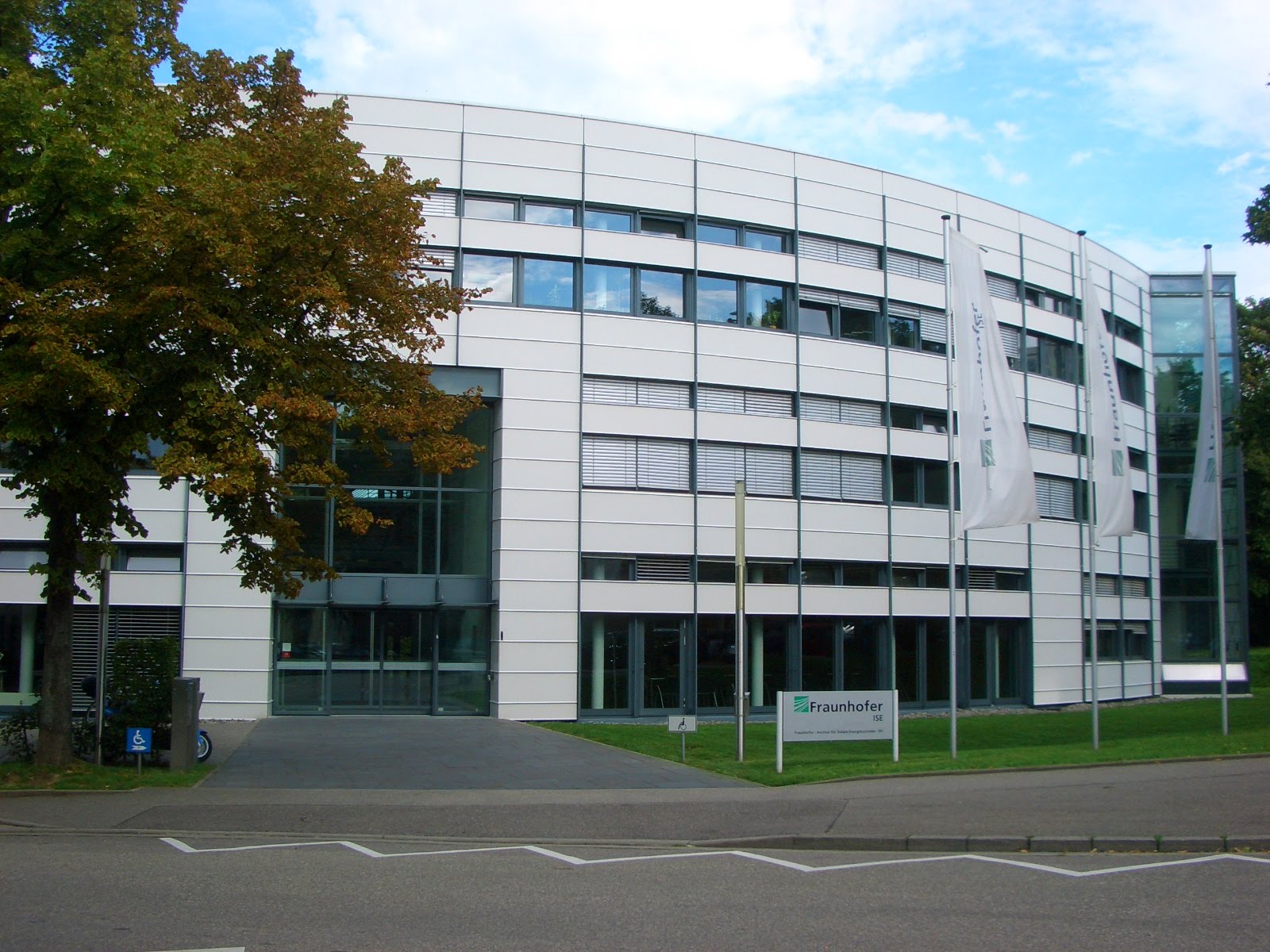
Solar Institute


Mobililty centre with secure bike parking adjacent to train station


How does the city of Freiburg rank to get its own blog entry? In it lives many of our dreams. Freiburg is achieving environmentally what we have been working for in Peterborough and elsewhere for a long time. There are solar panels and other environmental projects at every turn, backed by a comprehensive green strategy -- and its working! Freiburg is a bustling, thriving community. The main problem is accommodating all the people that want to live there - it is a great city. Their grassroots oriented development of the Vauban District (a former French army base) is a world class example of community participation in environmental design. Freiburg set its own standard for energy efficient building standards, and now the country has adopted the standard, with the city now going even further.

How did it happen? In the 1970's, a nuclear plant was proposed for a site 30 km from Freiburg. Protests started as both the city and rural population feared that their quality of life and standard of living would be affected by such a development. Vinters were against the project due to decreases in solar exposure anticipated due to the steam from the plant, city folks were worried about health impacts should any mishaps take place.. and then, the accident at Chernobyl happened. Meanwhile, the protesters realized that protesting was not enough and they set about creating the conditions for a sustainable future for Freiburg, without nuclear. The city is still evolving and learning.... what an inspiration! Their projects are so successful that there is a company set up just to provide tours and information to interested parties, many of them international. They have a solar research institute that is a professional carbon neutral building, a neighbourhood of energy plus houses (houses that produce more energy than they use), churches covered in solar panels on the south side. Even two grocery stores and a parking garage are covered in solar panels.

Freiburg is known for their solar initiatives, but their environmental commitment and initiatives run much deeper. Unlike in other European cities with environmental projects, the many people we stopped and asked about the initiatives in Freiburg were full of information, much the way most people in Peterborough could tell you about the Festival of Lights. Way to go, Freiburg (and the old downtown and neighbouring Black Forest are pretty nice, too)!

Wining and Dining Along the Mosel and the Rhine, Germany

August 18 - 25:

Twike - a tandem bike much snazzier than our rigs!


The rally car displays next to our campsite in Trier


Vineyards (and wine) abound at each bend in the Mosel


Beautiful riverside bikeways in Cochem


Kaiser Wilhelm monument at the confluence of the Mosel and Rhine in Koblenz


At times in our travels, the stops along the way are our rests as we cycle. In the case of this week's side trip along the Mosel and Rhine, our bikes were our transportation between places. We stopped often to photograph sites, especially the many castles, sample local wines and dine on the rich German food, which is much more affordable than other places we have visited. We logged only 35 - 45 km each day (with some hiking to castles and hoisting of glasses, for additional exercise). The campsites and food stops were so plentiful, as there are loads of touring cyclists, that we had to do little planning and could simply roll east down the Mosel, and then, up south along the Rhine without having to carry sufficient food for the next meal. The campsites were great and in terrific locations. We camped at the base of the famed Loreley cliff under a full moon (with delightful and helpful Dutch neighbours) and at the confluence of the Mosel and the Rhine in Koblenz.

The only challenge was our arrival in Trier, where we found there to be a lot of fast drivers. We were a bit surprised by our challenging ride to the campground until we found out that an international car rally (i.e. race) was taking place on the local roads that weekend, starting the next morning at 8 a.m. Guess how we found out? Many of the race marshals were camped (and drinking) alongside us at the crowded campground and the cars were all displayed along the river at the edge of the campground. As it turned out, we saw some of the cars in action along the narrow vineyard roads, but didn't have to vie for road space with them (or their helicopter and fan entourages).

Along the Mosel, we cycled through countless vineyards and quaint towns with traditional half-timbered German homes and toll towers. Many towns have ancient celtic and Roman roots, with building remnants that show the layers of history - particularly striking was Trier's Black Gate, Coliseum and Baths. The Rhine River from Koblenz to Bingen is a UNESCO World Heritage Site and the landscape and river traffic kept us enthralled, with castles and views at every turn.

Travelling and camping along this section of the Rhine is noisy, though. The hills rise steeply from the river and there are virtually no bridges along this section. Thus, there is a road and busy railway, as well as the many commercial boats on the river contributing to creating an almost constant transportation related rumble. For most campers in caravans/trailers, this is not a problem, but our tent doesn't match up in the soundproofing department! We loved the scenery and wine here, but do miss the quiet of the Canadian wilderness!

Here We Come Kiera!

August 9 - 18:

Sue and Ian with Kiera outside the campground building and spa!

Wonderful reunion with the Naudaschers


Attridge home in Mahlberg from 1979-1981


And so we journeyed by train across Germany to meet up with our niece Kiera, who was visiting Lahr for over a month on an exchange. We breezed through the lovely Island of Bornholm, Denmark on our way to Rugen Island, Germany. This island is famed for its cycling, but we were unimpressed with the facilities provided and the island was crawling with bikes and cars, a holiday haven for sure, but not what we expected. We did enjoy swims from the long crescent of sandy beach, though! We had the luxery of a 2-day stopover in Berlin, where we scurried around to see what we could of the city. We loved Berlin, found it to be very cycling friendly, except for the tram tracks (Ian landed on his feet) ... We familiarized ourselves with German train travel again and had a great experience crossing the country to the southwest where we met up with Kiera, Ian's sister Karen's 16-year old daughter. We were pleasantly surprised to find that our campsite, situated in the scenic Black Forest, included a luxerious spa - regular sauna, Finnish sauna (super hot), steam room, rainforest shower, etc. Not bad digs for campers on bike!

Ian showed us around the little town of Mahlberg where his family lived from 1979-1981 and we had a great rendezvous with the Naudaschers, from whom Ian's family had rented the house where they lived in Germany. We had so much to share and talk about in their sunny windowed addition opening on the garden. It was a fun reunion to share stories, chat about biking and local history, meet young members on both sides, try fabulous cakes and wine from local vinyards, and even be serenaded by Kiera's singing! We also enjoyed meeting Kiera's host family in Lahr, who were generous in their hospitality to us and acted as a base for our excursions into the city. Before leaving the Black Forest, we had a delightful walk through the forest itself (a popular activity in these parts) and also rode our bikes up steep hills to the top of the peak housing the ancient Garoldseck Castle (a fun place to visit during Ian's late teens). The visit brought back many memories of family, friends, school events, birding along the Rhine, and adventures for Ian during these transformational years at the end of high school.

The Naudaschers all have solar panels on their houses. In Germany, we saw many solar panels on buildings, plus the wind turbines that are common in France, Holland, Denmark and Sweden, and also, tons of solar panels, both photovoltaics for electricity and hot water. The German solar incentive program has really caught on!