Wednesday, November 17, 2010

France - High on Return

France, October 28 - November 9:

Heading south from the French Alps at Briancon, the highest town in Europe (1321 m)


The valley views south of Tallard
Medieval town of Sisteron at a narrowing of the valley walls
Cold ride in the rain entering Provence, just south of Forcolquier
Roussillon, Provence - famous for the local ochre coloured soils

Provence colours
Gordes - lost in the mist
View from Gordes - another cycling destination in the clouds!
Pont du Gard near Avignon with friends and gracious hosts Gaston and Martine
Heading to Arles from Avignon - awesome riding!
Up to Beax-en-Provence
The Mediterrean at the Camargue wetlands
No trail...
Yes a trail - you win some, you lose some!
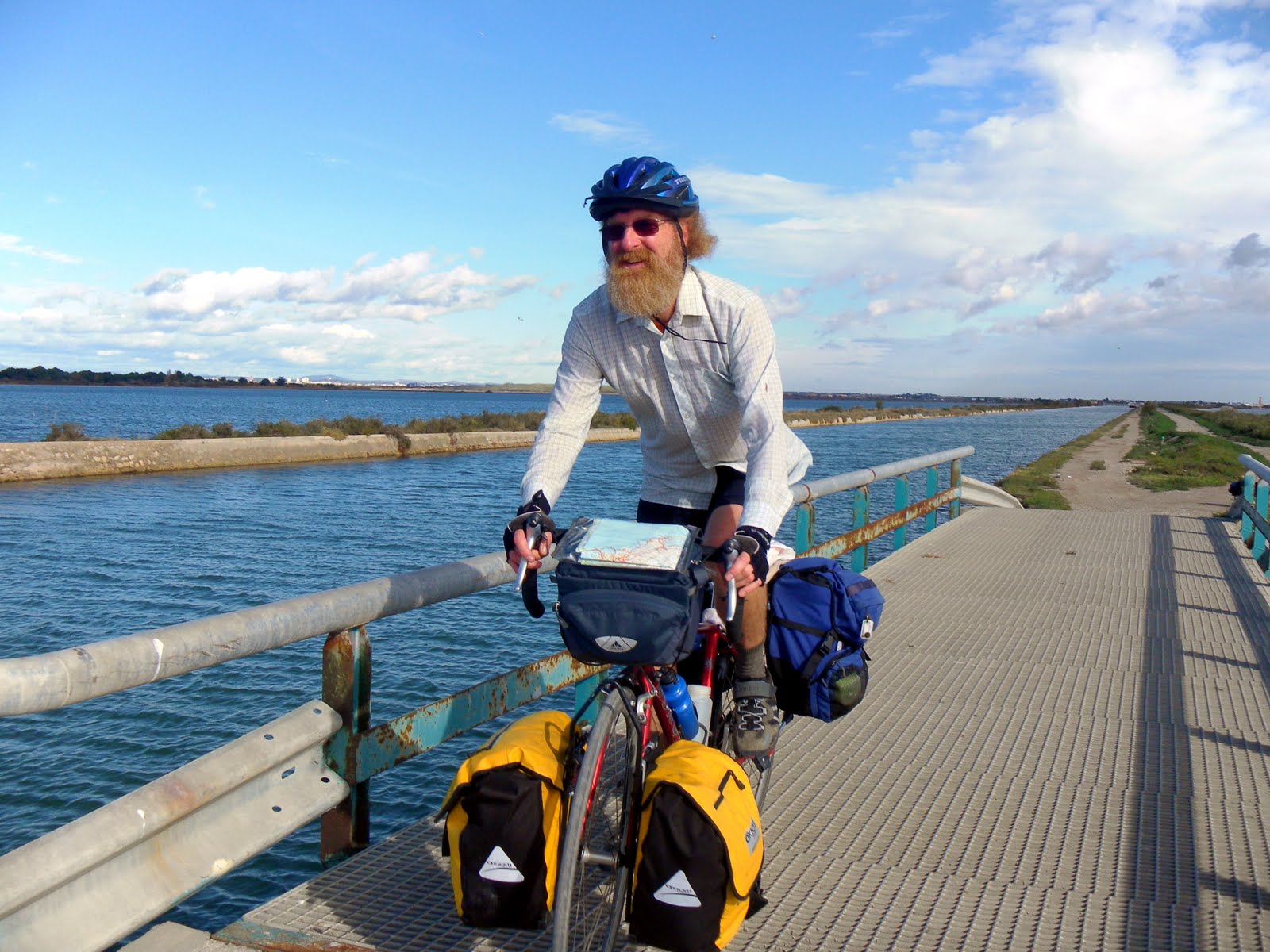
Sete, France
Canal du Midi with plane trees lining the banks
Great train from Agde to Carcasonne
Castle in Carcassonne
Ride south from Carcasonne to farm in the mid-Pyrenees - one of our best rides of the voyage!


We had the ride of our lives. In 4 days we biked from the Haut Alpes around Briancon down to Avignon in Provence. When we arrived in Briancon, the French trains were all on strike. Like many other industries in the country, they were protesting the raising of the retirement age from 60 to 62. The weather was brilliant and warm, unusually so for this time of year.

Again, the scenery and weather beckoned us on to our bikes and we headed down through the alps to Mont Dauphin. The ride was spectacular with new snow-capped mountain views around each bend -- and it was mostly downhill! Had the road been quieter with less trucks, it would have been even better, but the paved shoulder was in good condition and gave us ample space to ride comfortably with the traffic. We found a welcoming, warm hotel (we knew the warmth would fade quickly at dusk) with a restaurant in Mount Dauphin, at the foot of the medieval promontory town that was catching the late afternoon sun.

From Mont Dauphin, where we noticed frost on the cars in the morning, we headed further south and west, with stunning landscapes fueling our riding, past the sinuous Lake Serre-Poncon, down to the town of Tallard. Here we hunted a long time for accommodation, finally finding a little hotel along the outskirts of town by the highway. Our lucky weather streak continued until the next afternoon when a misty rain started off and on. In the meantime, the mountains softened to hills and the valley broadened. The riding was glorious as we followed a quiet road down the valley all day, with vistas across to hill towns and ridges. We passed hundreds and hundreds of apple trees and lots of other fruit trees, too, and a busy roadside market. Around noon, we came upon the stunning village of Sisteron perched precariously on a ridge over a river, with rock walls pinching in from both sides. We wandered narrow lanes, caught the market for lunch, and were proud to see 2010 Tour de France banners hung in town (although I think they were heading up the vallcy, not down like us)! Near the end of the day, as it started to rain in earnest, we found a room at a deer farm near the town of Forcalquier (farms commonly have a few hotel-type rooms in France, which is one way to help diversify and enhane their incomes) . We welcomed the dinner served at their restaurant, having riden 90 km that day, one of our longer rides.

Facing a weather forecast of solid rain, wind and a high of 14, we decided to make a quick 45 km dash along gorgeous, quiet roads to the town of Apt, where we knew there was at least one hotel we could stay in. The scenery was great, the descents welcome, but the rain did not let up all day. It poured, then poured some more. Arriving in Apt, we were quite cold and thoroughly soaked, one of the few times in our entire trip. We found exactly what we needed, a sweet, warm hotel that even had a bath. We spent the afternoon warming up and drying out. The town was lovely, but with the weather, we only made a quick nip out for dinner with a borrowed umbrella.

On November 1, we arrived in Cheval Blanc, near Avignon, to stay for a few days with another cycling couple we had met twice in Normandy in June. The ride to Cheval Blanc was terrific. We travelled along more scenic, quiet roads via the attractive towns of Roussillon, Gordes and Menerbes. In the Roussillon area, the soil is light yellow blending to bright red and orange, and ochre mining was a big part of the economy before fossil fuels replaced them in the rubber manufacturing process. The cliffs and town bricks and artwork all reflected these colours. The views of classic Provencal fields of lavender and grapes were delightful on our climb up to the perched hilltop town of Gordes, although the fog obscured the vistas from the top. Stonework without mortar, found in fences, field huts and houses, is a specialty here. A quick climb up to Menerbes and through a string of towns leading around the prominent Little Luberon ridge took us on to Cheval Blanc.

Our friends, Martine and Gaston, made us feel welcome in their lovely, historic home that is attached to the original mill in the area. They took us to some of the local sites, including Fontaine-de-Vaucluse where a river gushes out of a hill and its deeper source remains a mystery. We also explored historic Avignon and then the Pont du Gard, a high three-tiered ancient Roman aqueduct over the Gard River. It was great to hang our hat in one place for a few days and our French improved each day we were there. Both Martine and Gaston tell a lot of stories and have a lot to share, so we had to work hard to keep up in French!

With great cycling tips in hand, we bid adieu to Gaston and Martine and headed for Arles, famous for its great Roman amphitheatre and theatre. The first 15 km of the ride was a little busy, but after that, we hit some gorgeous quiet roads, once again revelling in sunshine and beautiful scenery. We wound our way through the pine-covered angular white Alpilles hills, so called because they are like a miniature version of the Alps. We saw many cyclists on this warm fall day but, not surprisingly, we seemed to lose most of them when we headed up the steep hill to Beaux, a medieval town with splendid views all the way to the Mediterranean Sea. We saw more evidence of ancient Roman aqueducts as we continued on to Arles. Once in town, the roads seemed to be a bit of a tangled mess and we ended up in an entourage of fellow tourists searching for the youth hostel, which we eventually found.

From Arles, the cycling became quite flat, which we hadn't experienced in some time! We headed to the Mediterranean at Stes-Marie de la Mer, on the edge of the great Camargue wetlands at the mouth of the Rhone River. At a local museum, we learned much about the production of rice and wine here, and the culture around specialized horses used to round up cattle. Nearby, there is a large bird sanctuary with flamingos (we saw 500+ up close), black ibis, black stork, coot, purple gallinule, egrets, and recuperating birds including several owls. We camped for the first time in a while and had a little party with a few other long-term travellers around a barbecue. We were still the only tent campers though... we are defininely pushing the season!

Indeed, on our next night at Le Grand Travers, we had to sneak into an RV-only park and camp somewhat surepticiously, packing up early and heading off along the windy coast to Agde and the start of the Canal du Midi. On the way, we passed through the town of Sete where Ian and and his high school friend Tim had travelled some 30 years ago. With memories of Ian and Tim struggling with their tent due to the strong gusts off the sea, we pedalled along the coast into the merciless wind. Again, we are reminded that flat riding is not always easy riding. We got a "blast" watching windsurfers and kite boarders screaming along the surface of the protected waters just east of Sete. With a change in the weather on the horizon again, we biked along the Canal du Midi trail (which varied considerably in its surface for the first 10 km, and sometimes extended through salt ponds with more flamingos) to Beziers. The rain is cold in November and we needed to move along to start our WWOOFing farm adventure, so we hopped the train and soon arrived in Carcassone. We still got soaked in the pouring rain just getting to the hostel, but it was a shortish ride, so we soon thawed and dried out.

We toured the old part of Carcasonne with its massive walls, towers and medieval streets in the morning and then had a fabulous ride south through the vineyards to the town of Limoux. Our farm family, Andy and Jessie Darlingon, picked us up there and we made the trek to their organic farm in the foothills of the Pyrenees.

Ups and Downs in Italy

Italy, October 8 - 28:
View from cathedral tower in Florence

Medieval street in Assisi, Umbria. Note the campsite is a little higher up than this with the same view.
Basilica of St. Francis of Assisi

Feast for the eyes in Castigliani del Lago, Tuscany
Montepulciano, Tuscany
Ian picking olives at farm we camped at just outside of Pienza
On route from Sienna to Florence
Day of dreams - ride from Sienna to Florence


Mediterranean coast at Levanto, just north of Cinque Terre
Welcome to Slow Food in Turin
Sidewalk archades of Turin

Ancient Roman ruins and aquaduct in Susa
Susa Valley
Italian Alps near French border


On October 8th, we followed a terrific, paved trail past Koper, Slovenia to the Italian border where, in cycling terms, we were dumped. Hello, Italy! Your cousins next door have a so-called peace trail to your border and, at that point, it then turns into an overgrown mud pit! Well, we found our way out from the path and followed some helpful local cyclists along busy streets, including through a poorly lit tunnel, into the chaos of motorcycles, little 3-wheel trucks and cars, traversing the portlands of the city without a map, in search of the train station.

Before we found our destination, we were assisted by a woman in a car who indicated that we needed to turn around from the freeway access lane we were on, a cycling couple, a cheerful older man who clapped Ian on the back as he gave directions at a corner, a nun whose blown cap we chased after, and giggling teenagers trying out their English. We chatted in broken Italian with a woman while Sue fixed a flat (from that dim tunnel), and we then escaped the industrial portlands and emerged into the magnificent architecture of the downtown waterfront. There, we encountered an enormous yachting festival, with yachting folks from all over Europe. We were a little out of place amidst the matching sailing gear and well-polished boats, and a tourism guy quickly spotted us. He came over and informed us that all the rooms in the city and for miles around were full due to this festival. Being too late to take the train much distance and arrive at a decent time to find accommodations elsewhere, he suggested we bike 20 km further north to a campground. Sue was not enthused as the light was disappearing already. We headed in the direction of the camping, pedalling fast. Some 5 km down the road, Ian spotted a hostel sign. Thinking that these yachting types were not likely to choose this type of accommodation, we checked it out. They had one of the best hostels in Europe just waiting for us! With a balcony, our own room, windows overlooking the Med (only 10 m away!), and a royal castle and national park within view, we had it made in the growing shade. Although the ride through Trieste was loud and busy and long, we had already met many friendly locals, and despite the poor riding conditions, we were enjoying the lively, warm, effervescent Italian people already.

But northeastern Italy wasn't our place to linger, despite some tantalizing possibilities. To get to our next cycling tour, we planned to travel west and south to Assisi in Umbria by taking 4 different trains and arriving at a reasonable late afternoon hour. However, we had a later overnight stop in Florence after Sue's bike was abandoned at the train platform in Venice, fully loaded with all our camping gear and bike tools, and food! The train simply took off with the bike there and us inside loading Ian's bike. Their trains are super long. Ian had to march quickly through the entire train to find a staff person, who arranged for us to get off at the next stop and for the bike to arrive on the next train. It was a bit of a delay and hassle, but we were pleased to have the bike back and all the gear on it! We later learned that this is not unusual and that bike tour leaders tell people to lean their bike against the train so they don't take off before the bikes are loaded. Of course, it would be much faster to load the bikes if their trains had wider doors, low floor technology (no stairs, like the German trains), some indication of which end of the train would have bike facilities, and available conductors to advise passengers ...

We found a large hostel with great (but busy) facilities, and shared travel notes with a cycling South African couple. Florence was so busy with tourists, even at this point in the season, that you couldn't get tickets without reserving ahead to some of the major attractions. Instead, we wandered the ancient streets and took in the spectacular architecture and major churches of Florence, a city well worth its renown but one that seems to be overrun by outsiders.

After a day among the Florence sights, we continued on to Assisi, a medieval town perched on a prominent hill in the province of Umbria. It was great - once you got up there! This was our first taste of the hills of Italy that we would be getting to know better as we cycled through the countryside from Assisi back to Florence. Most of the route is in Tuscany and the towns are on high hill tops, defensively overlooking the valleys. The camping was great at Assisi and the on-site restaurant, which many Italian campsites have, was fantastic. The traditional kitchen and eating area had a large open fire for cooking, and the roast chicken, soup and greens were delicious. Of course, St. Francis hails from Assisi and the large cathedral dedicated to him had interesting wall paintings depicting his life story. His simple cave retreat nearby, the pilgrims following his country meanderings (including a German Buddhist monk whom Ian met), and the numerous chapels and churches across the region and beyond pay tribute to the teachings of this humble man and his close connections with nature.

Our first day riding out from Assisi was disappointing. We started early, recognizing the shorter days, but Sue had two flats within the first 5 km. Then, we took a long time ascending the road into the town of Perugia, which turned out to be teeming with traffic as the town was preparing for an international scale chocolate festival. Behind schedule, we couldn't stay much longer than to scarf down some pizza ... and get into the spirit with chocolate, of course. Our way out of Perugia was a maze of roads with innumerable traffic circles pointing to the expressways for Rome and Florence with hardly a mention of nearby towns. By now, our cycling instincts were well honed, and we managed to find our way out of the maze without taking a wrong turn and only asking once for directions. But, the supposedly quiet road seemed to have become quite a highway since our guidebook was written and we were disappointed with the quality of the riding. The end of the day found us checking out closed campsites on Lake Trasimeno (with lovely islands and bordering wetlands and hills), so we grabbed a hotel room and cooked over our one-burner stove on the balcony. We were the only guests, so we were grateful that the warm hotel was open.

From here, the riding improved as we cycled around the lake to the medieval town of Castiglioni Del Lago. The town has a lovely setting on a hill overlooking the lake, and an ambiance with artisanal food shops just waiting to meet our food pack. From there, we enjoyed sunshine and quiet riding to the long, busy hill up to the town of Montepulciano. We marvelled at the medieval streets on foot, tasted their renowned wine, then descended a ridge and valley to an organic farm with agriturismo. Podere Il Casale, on the outskirts of the hill town of Pienza, offers camping and a large heated room where wonderful dinners are served up every night for their volunteers and paying guests. The nights are cold and dark for cooking now, so a warm, lit room filled with hot food each night is a real treat! With a welcoming setup and interesting companions, we decided to stay a few days. One day, we toured some of the higher Tuscan towns by bike without our baggage, including an ancient thermal bath town (Bqgno Vignoni) , Mount Amiata's heights, views, and twisty climbs and descents, and the edge of famed Montalcino. It turned out to be an incredibly scenic but tough 80 km ride. We recovered the next couple of days, picking olives, chasing sheep and celebrating a Swiss girl's birthday in fine style. The goat and sheep cheeses, plus wine and olive oil, are well known from this farm and we can confirm that they and the hosts' dinners are quite delicious!

Our next destination was north towards Siena. The riding and scenery were terrific, and even the hills were not too daunting. However, signs for 20% grades, both up and down, made us wonder! Pienza is known for central square planning by a Pope; one ancient town en route celebrated truffles , another its lofty abbey, while we enjoyed the sunny views across valleys towards high-walled and -towered villages (such as San Gimignano). The Tuscan countryside was aglow in muted yellow, orange and rusty tones, with deep furrowed fields and sentinel cypresses lining lanes leading to siena-coloured stone farmhouses. It started to pour just as we arrived in Siena and by the time we reached the campground, we were soaked. For the first time in a long time, we met touring cyclists; one couple was from Australia and the other from Maine USA. We spent a couple nights sharing stories and plans. The ride north on to Florence was great and the weather was shining in our favour again. We felt so lucky to see the famous Tuscan landscape with such clear skies and we ate up the quiet roads we followed (until about 5 km from the city). The Italian roads can be very busy and it is tight in towns with their medieval narrow lanes, but in the north we find the drivers respectful and patient with cyclists. We have heard that this attitude does not always prevail in southern Italy.

This time, we stayed at the campground overlooking Florence, lit up below us in the evening. We managed to make our way down to the train station between bouts of rain in the morning where we boarded a train to Levanto, a small town on the Mediterranian adjacent to the famous Cinque Terre region. Given our plans, we only had one day in Levanto, but we made the most of it. We found a campsite in town (not surprisingly, we were the only ones camping there) and went for a gorgeous walk along the coast, enjoying the sunset views alon g the coast, then seafood dinner out. We felt another short burst of summer in the warmth of the afternoon sun, but as soon as it dipped below the horizon, we were reminded that fall had arrived.

We arrived by train in Turin, northern Italy, after an early morning rise and scenic ride along the coast to Genoa and then a turn inland and north. We settled into our somewhat dingy hostel, sharing a room with 4 other people, one of the only rooms below 100 euros a night that we could find. We were in town for the biennial Terra Madre event, a 3 day conference where people from all over the world meet to share ideas and experiences that improve community food systems and sustainability. The workshops were stimulating, as were the practical sessions that helped train the senses to better taste, smell and savour our food, complete with elaborate wine tastings! We both went to the huge Slow Food emporium where you could taste and buy locally- and sustainably-produced specialty foods from around the world. Every region in Italy was particularly well represented and we enjoyed hours eating, drinking and chatting with the food providers.

After Terra Madre, we toured around the city of Turin. Sue, in particular, was taken with the city, its arcades, squares and riverside walks (despite some heavy rain). Our local coffee bar had great coffee and croissants to supplement our breakfasts! From here, we had planned to take the train into Provence, France and then do some volunteer farming further west in the southern French region of Aude. We did recall our not-so-great train experiences in France and Italy to this point.

Then we noticed an enticing mountain valley with a flat quiet road leading to the border, as well as a stellar weather forecast. That was all we needed to persuade us to bike west into the Susa Valley from Turin, heading straight towards towering white mountains glistening in the sunshine. We stayed at an awesome B & B in Susa, a delightful town replete with Roman ruins and surrounded by mountains. We went hiking for a day to garner great views up and down the valley. We then continued up (OK, it was fairly flat to Susa at least!) to Aulz where, after some convincing of the driver, we scored a shuttle bus over the high Alps pass some 20 km west into Briancon, France. The vistas were perfectly clear and the mountains were stunning with new fallen snow on the ground at the higher elevations. What a trip we are on!

Mountains and Seashores in Slovenia


Slovenia, October 5 - 8:

Train from Hungary - just after the bus part of the train journey. A little tricky with bikes!
Our hostel in Ljubljana - believe it or not, a jail developed by artists!

Farm in foothills of the Alps.
Bled, a popular tourist spot -- see why?

Rail trail along the coast heading to Croatia.
The warm Mediterranean! Great trail too!
Enchanting medieval town of Piran, close to Croatia.
View over Izola, with Italy in the background.


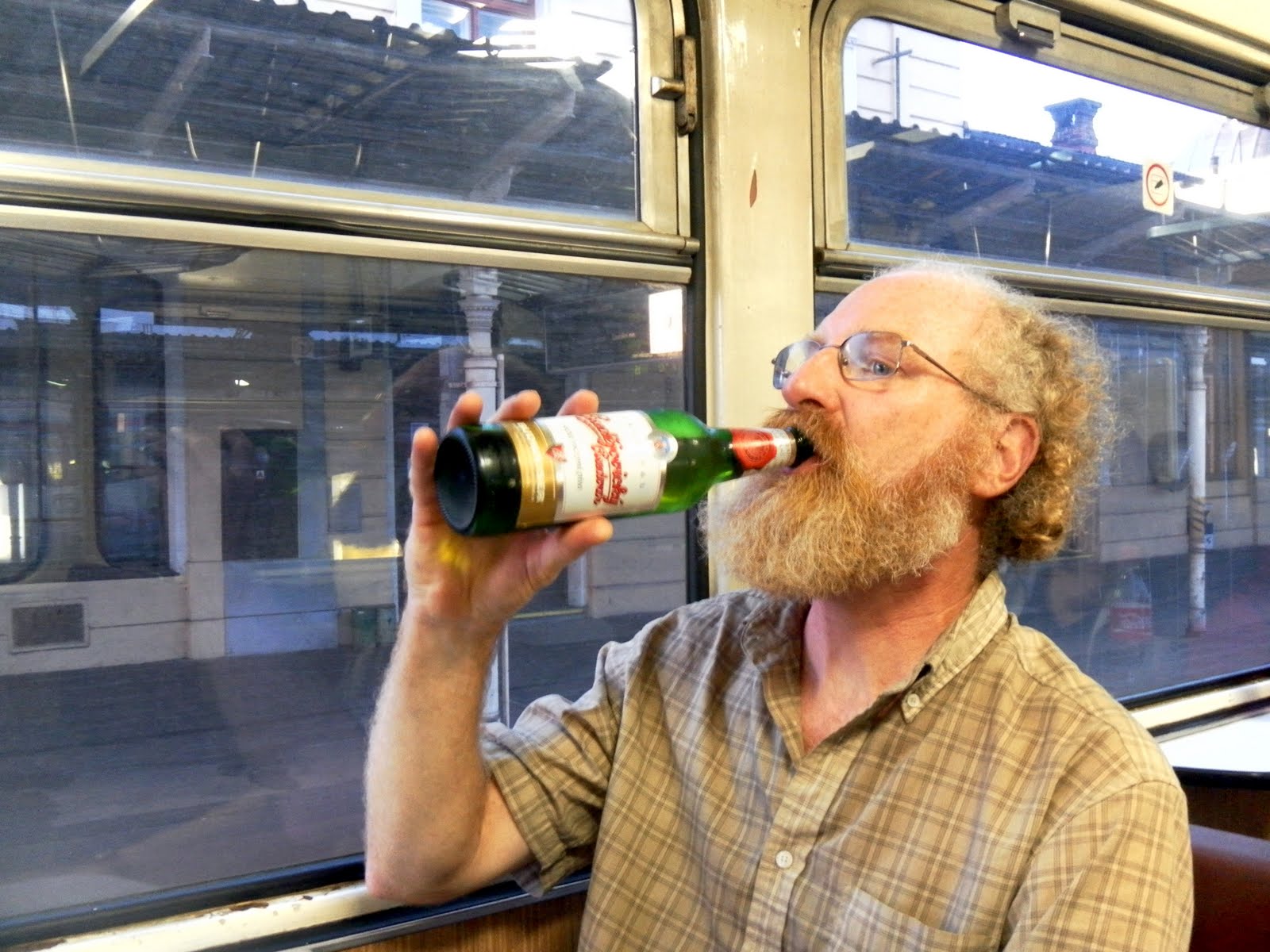
We had a warm reception at the Celica Hostel in Ljubljana at 2 in the morning, with their all- night staff ready to show us to our prison cell. Really! The hostel is a former prison and an artist's co-operative gave the about-to-be-demolished prison building new life by turning it into a great hostel with helpful staff. It had a sun room for breakfast, an area for gatherings and jam sessions (including an intriguing concert one evening), plus a small art gallery used as a vocal harmony practice venue! Each bedroom is different, with even the furniture arranged by different artists in each room. Unforturnately, our artist liked the idea of sleeping closer to the sky, so our individual beds were almost 2 metres up in the air. It was a bit of work to get up there at 2 in the morning. Luckily the wine from the train ride had long worn off!

We toured modest-sized Ljubjana, capital of small Slovenia, enjoying their market and artisan food shops, and their historic and reinvigorated castle overlooking the city, all the while dodging rain drops. Tempted by the photos of the mountains and trails in the Bled area to the north, we took a bus to Bled and Bosinj the following day and hiked from a mountain lake up to some waterfalls. The mountain river roared down a cleft in the cliff, then tumbled down a picturesque gorge over boulders and through just-turned gold and russet deciduous woods. Late in the day, we saw a bit of the town of Bled as well, from a scenic path around its mountain lake, although the vistas were largely hidden in the clouds and 'mist'. Our final leg in this former part of Yugolavia took us by train to the Adriatic Sea coast at the ancient seaport of Koper. Here, we encountered summer again. It felt so good to strip off some layers and feel the warmth of the sun. We biked along the coast, within sight of the Croatian border where the terrain was rolling and beautiful! In the evening, we visited a popular medieval town, enjoyed the seaside atmosphere (and seafood, of course!) and spotted the lights of Italy's Trieste and Venice in the distance. We felt that we had barely scratched the surface of the scenic splendours and the warm, creative people of Slovenia, but were glad that we had lingered longer to at least sample a bit!

There is a distinct pattern to our camping now. We are the only ones tenting and there are not a lot of other campers around at all, mostly empty trailers. It seems as though we may be pushing the season a wee bit! Even here, on the Mediterranean, the nights have become quite cold at times. Accordingly, we decided to push on to Italy and further south into Tuscany.

Sunday, October 10, 2010

Hungry for Pavement in Hungary

Hungary, September 24 - October 4:

"Chalk Man" (whom we never met) was a big help, with helpful arrows along the way! Notice the arrow and the letters ATM on the pavement. Apparently, we are not the only disoriented cyclists in these parts! Too bad Chalk Man didn't leave a currency converter at the ATM. We accidentally took out $1000 instead of $100. Then again, we didn't need another ATM in Hungary!
EuroVelo Route 6? Yup, right, ug, here, after two hours of cycling in circles through automotive industrial parks and flea markets. Funny the signage isn't quite up to snuff! It's quiet though!
View from Esztergom Basilica along the Danube River. Campsites are sure getting quiet - perhaps fall is catching up to us ...!!
Now the trail is better and the locals are out on errands. Notice the flowers.
Budapest beckons.
Hot springs spa in Budapest
Tile work in plaza, St. Stephen Basilica in downtown Budapest


We pressed on into Hungary with fall weather chasing us. The nights are noticeably cooler and longer now, and our first night found the campsite closed for the season. Instead, we followed the light to a lovely horse farm with rooms. Our first taste of Hungarian hospitality was delicious, two large pieces of lovely birthday cake from a family celebration of our hosts! We carried on through many small towns and countryside to reach the city of Gyor. We loved Gyor - they have restored all their gorgeous buildings downtown, with lovely squares and pedestrian walkways. They held off the rain until we were settled into a sweet hotel for the night, and we lucked out and were there for a Roma festival of dance and music that was top notch. It was an outdoor festival that held the crowd captivated, even through bouts of heavy rain.

We loved Gyor, but we didn't have fun leaving. It took us 2 hours to wind our way, lost, through the suburbs and auto plants, only to find our signed trail turn to a muddy road after a few kilometres. After faking our mountain biking prowess, the surface improved and we sailed into Tata, once again just in time to escape a deluge of rain and dropping temperatures. We arrived in town at the same time as did Sarah and Mike, British cyclists heading our way - we ducked into a pensione together and then enjoyed a nice dinner sharing cycling stories. We also cycled on to Esztergom the next day together. It was a mixed day of busy roads, one stretch of lovely countryside and then a bit more... well, mud puddles!

We camped in Esztergom, getting in early enough to visit their famous basilica and enjoyed a great dinner out. We have been eating in restaurants many nights because the camping is mostly closed and the weather a bit cool. The ride from Esztergom to Sentendre was our best in Hungary - and lo and behold, we again met Mike and Sarah at the ferry, joined by another cycling couple from Madrid. This part of the route includes the scenic Danube Bend where the river turns south and heads into Budapest. Large hills line the river here, with vineyards and ancient castles, and the trail is well signed and in reasonable condition. From Esztergom to Budapest, the ride was unexciting, traversing kilometres of city, and the trail was difficult to find in places. We were impressed with the riding in Budapest, though. We had heard that it was horrendous in the past, but now they have lots of trails, cycle tracks and bike lanes. Way to go, Hungary! In fact, most of the urban areas that we encountered in Hungary had extensive cycling infrastructure. Although not perfectly engineered, it was humbling as Canadians to see what a great job of providing for cyclists a relatively poor country like Hungary does. Hungary more than any place we have visited so far inspires us to do better for cyclists in Canada.

We had a restful time in Budapest, enjoyed the great location, kitchen, visitors and staff at the Red Bus Hostel. Our bikes liked it, too! They got parked inside for a change and got to thoroughly dry out. Luckily, Sue had cleaned most of the mud off the bikes before entering Budapest! We also got a chance to give ourselves a good cleansing too, as we enjoyed the Turkish-influenced bath culture at one of the four major hot spring spas in town: saunas, steam baths, some 15 or so pools of different temperatures, plus one with circular waves and bubbling jets that kept the fun quotient high for all the bathers of many ages. Ian enjoyed the agricultural museum (forestry, farming, gathering, fishing, hunting, conservation, plus traditional breeds of livestock), while we both marvelled at the city bike show's penny farthings, cycle taxis, scavenger hunt around town, plus kids doing bike tricks.

We found the free (except tips) walking tours were informative, giving us a tour of the core of downtown and up to the heights of old Buda, plus a window into the changes from early tough communism to a later, lighter version. The magnificent parliament caught the afternoon light along the riverbank, but the nearby shoes as memorials brought up past Nazi horrors. Hungary has had to endure so many foreign powers coming through over the centuries and continues to struggle as it emerges into self-determination - the local elections took place while we were there, with conservative councillors being the most successful.

On the Sunday we visited a Unitarian church service downtown (in Hungarian, of course), and chatted with a few congregation members and the minister afterwards. The latter had visited the First Unitarian church in Toronto, and was very knowledgeable about connections between Unitarians in North America and in eastern Europe. We also connected in the city with Ian's Uncle Jack and Aunt Gail, who had just finished up a Danube River cruise that had started in Amsterdam. Over a fancy breakfast at their hotel next to the Opera, we shared news, stories and reflections and were glad to meet up with family from home!

After our rendezvous, we packed up our gear and boarded the supposedly direct train for Llubljana, Slovenia for a fateful "three hour cruise" of nearly Gilligan's Island proportions. We had chosen this train since we could not make the logistics work to spend an extra day around central Europe's largest Lake Belaton. However, around 5 pm, we were informed by the conductor via another passenger that we would have to change trains, with a half hour bus connection in between! Well, they said they didn't have room for the bikes on the bus, but we eventually got them to fit, then had a half hour wait at a countryside station as it started getting dark, and then joined a young professional Latin dance couple in the next train's compartment. Three stops later, we had to move all of our gear and bikes back three cars, and then do it again at the border with Slovenia. We now think that the train systems (and the ticket agents back in Budpapest) still leave alot to be desired! Still, we admire the Hungarian people, their courage and persistence, and the fact that much is starting to change for the better.

Monday, September 27, 2010

Czeching out Austria

Austria and Czech Republic, September 8-23:


The Real Bud in Ceske Budjevice - on train to Ceske Krumlov
Ceske Krumlov, The Czech Republic
Viennese Host Heinz and his partner with Ian
Coming in to Passau, Germany on the Bike Trail along the Inn River (from Salzburg)

Further down the Danube just past Grein, Austria


Austria's mountains and the Danube River called to us, so we caught an early train from Lucerne to Zurich and onwards to Salzburg in Austria. Along the way, we passed through lush Liechtenstein, along steep river banks, and spied the Tyrolian alps shrouded in wisps of mist for most of the day. In Salzburg, we camped on the outskirts of town with a view off to the castle and a good, warm restaurant on site when the weather turned wet. We explored the ancient castle with its grand views over the old town, the latter filled with historic churches, squares and quaint store signs hanging over the street.

It was then time for us to saddle up and sidle down the Salzach River. We enjoyed pleasant shoreline riding, with a few strenuous climbs up to a plateau above the floodplain. We arrived late afternoon in one of our favourite towns across the river in Germany, Burghausen, and checked into a youth hostel attached to a music school focussed on jazz! We enjoyed a sunset stroll and then, as we were returning to our lodgings, followed the sounds of a jazz standards concert by a young trio in the medeival heart of the old town. Next morning we hiked up to Burghausen's castle, the world's longest (1.3 km or so), stretched in dramatic fashion along the top of a ridge and entirely surrounded by the winding river below and its natural oxbow lake. Quite a delight to discover this town with a flare, both old and new, cultural and natural!

Our journey downstream led us to the confluence of the Salzach with the Inn River, bordered by an international nature reserve of lowland forest and floodplain. We encountered a succession of old towns with colourfully-painted buildings, ancient fortifications and "cyclists welcome" signs on guesthouses and streetside pubs - at one, a fellow cyclist approached us and invited us to stay with him outside of Austria! The Inn led us down to Passau, at the dramatic junction with the renowned Danube River. A few hours exploring the pedestrian-only core and we then set out along the well-marked cycle trails beside the Danube. What amazing views of treed shorelines, steep hills, peaceful trails, and passenger and freight ships, shared with a fair number of fellow cyclists on day- or multi-week trips. At Schlogen, we arrived at a splendid bend in the river with a small farm/restaurant/ferry service/campsite, and settled under the apple trees for the night. Our only neighbour was a French cyclist from Lyon. After a cold night with lots of dew, we had a chance to dry everything out and add to our breakfast fresh cow's milk - about half an hour out of the cow!

At Linz, we stayed at a suburban hostel, got cleaned up and indulged in a typical buffet breakfast of buns, cheese, cold cuts, cereal, coffee, tea, juice - and cake! Linz was Europe's cultural capital in 2009 and has a suite of dramatic architecture along its main square and roads, plus a new modern art gallery lit up at night along the Danube. We enjoyed the historical treatment of Austrian works, particularly learning of the mayor's social actions in the 1940s and artists' resistance to Nazism (this, after all, was where Hitler went to school and first declared the anschluss of Austria). We also were amazed by the light waves show across the river at the Ars Electronica Centre.

We wanted to see a sampling of the Czech Republic and took a train from Linz to Prague, crossing the former Iron Curtain along the way. How things are so different now - no border controls throughout most of Europe, use of the Euro pretty much everywhere (but not in Czech or Hungary), and an international exchange of people, ideas and culture that was smothered for 50 years until the dramatic peoples' (largely) peaceful revolutions in eastern Europe. Prague, as we had heard, was magnificent architecturally - the old clock tower, Charles Bridge, churches, synagogues, central squares, public edifices and buildings along every downtown street. The castle was extensive (the world's largest), with King Wenceslas' tomb in the cathedral, but we actually enjoyed some of the other smaller castles more, such as the one at Burghausen. Despite some rain, we appreciated this centre of culture, including a classical symphony concert at the Municipal Hall. A brief visit to the Unitarian church near the Charles Bridge helped us connect to our wider Unitarian community beyond our own Peterborough Fellowship.

After a tip from some Italian women cyclists we encounted twice along the Danube, we extended our Czech leg to the world heritage site of Cesky Krumlov, between Prague and the Austrian border. This is an intact medeival town along a curling stream, overlooked by another ridgetop castle and gardens. The buildings were in good shape, full of shops, accommodations and restaurants, along active streets - with loads of tubers and kayakers running the rapids before retiring to the pubs! The surrounding hills, forests, brooks, ponds and villages were also a treat, as were the old centre and beer of the original source of Budweiser Beer - Ceske Budejovice!

Upon returning to Linz in Austria, we moved on to Mauthausen, the site of a Nazi concentration camp and centre of a network of some 80 work and transportation camps across Austria. Over the course of 7 years, some 200 thousand people passed through these camps, of which about half died from deliberate execution or deplorable conditions. You could feel the weight of such horrors there. We spent most of our time absorbing the impact of this era through the numerous dramatic memorials just outside the camp's walls - to the children, Jews, homosexuals, Roma/gypsies, Russian prisoners of war, and people of many nationalities, especially from eastern Europe. One of the more moving monuments was to the American soldiers who died in the fighting as they moved forward to liberate this camp, with others helping its survivors to recover. Exploring the Old Jewish Quarter in Prague impressed upon us again the magnitude of the losses to the Jewish, Czech, European and world communities of so many Jews during the Nazi regime. Few synagogues now operate and the Jewish population has contracted so much, both here and across Europe.

We spent three nights in Vienna, graciously hosted by Heinz, a fellow cyclist we had met further up the Danube. We had a whole basement suite and went out two nights to different wine taverns in the Klosterneuburg area where Heinz lives. One must do in Vienna as the Vienese do! A wine tavern is run by the family of a local vintner and they serve they own wines and terrific traditional foods. We think the tradition could be worth replicating! During the day, we visited St. Stephen's cathedral, gawked at the architecture along the ring road (built on the former land of the medieval wall), visited the Hofburg Palace and the Albertina on opening day of a fantasic Picasso exhibit. The exhibit was called Peace and Politics and delves into these aspects of the artist's work and life.

The ride out of Vienna was less than stellar with the classic lack of signage which characterizes so many long distance bike routes in and near larger centres. We eventually reached Bratislava, Slovakia. We had a quick, but thoroughly rich experience in Bratislava before heading off to Hungary along the well paved Danube River trail, which is part of the long distance EuroVelo Route 6.